
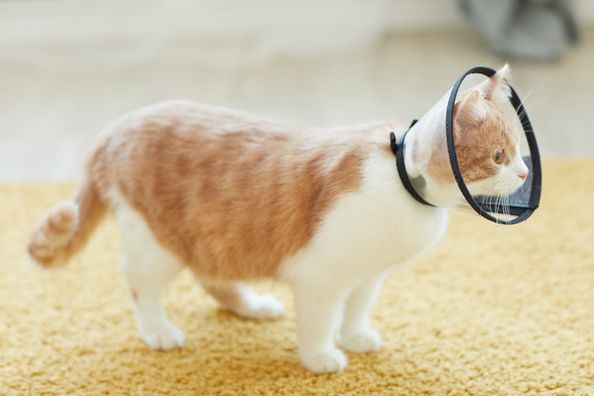
You have noticed your cat’s belly looks rounder than it used to. Maybe you caught it during a routine petting session. Maybe it became visible from above when your cat was walking away. Maybe you picked them up and the weight felt different. The question immediately follows: is this serious? The short answer is yes a swollen belly in a cat is always worth veterinary evaluation. The longer answer explains what is actually happening when a cat’s abdomen swells, which causes are most time-critical, and what signs alongside the swelling indicate that you need to call your vet today rather than wait for a routine appointment. This guide addresses the question directly and gives you the framework to answer it accurately for your own cat.
Signs Your Cat Needs to Be Seen Immediately
Some presentations of a swollen belly in cats require same-day care regardless of any other factors. If your cat’s abdomen appears swollen and any of the following are also present, contact your veterinarian today without delay:
Difficulty breathing: Fluid accumulation in the abdomen puts direct pressure on the diaphragm, reducing lung expansion. A cat with a swollen belly who is breathing rapidly, with visible effort, or with open-mouth breathing has reached a point where fluid volume or fluid-related pressure is affecting respiratory function. This is urgent.
Gum color change: Pale, white, yellow-tinged, or blue gums alongside abdominal swelling indicate a systemic failure. Pale gums suggest blood loss or severe anemia. Yellow gums suggest liver disease. Blue gums indicate oxygen deprivation. All of these paired with abdominal swelling are emergency presentations.
Inability to rise or sudden collapse: A cat with a swollen belly who cannot stand or has collapsed is in physiological crisis. Go directly to the vet.
Abdominal swelling that appeared in hours: Rapid-onset abdominal distension in a cat suggests internal bleeding, a ruptured organ, or acute fluid accumulation. The faster the swelling develops, the more urgent the response should be.
Known or suspected trauma: A cat that was struck by a vehicle, fell from height, or had a wildlife encounter and has a swollen belly may have internal bleeding. The belly swelling may not appear immediately after the trauma; it can develop over hours.
Why a Gradual Swelling Still Deserves a Same-Day Call
Most cases of a swollen belly in cats do not involve the dramatic emergency signs above. Instead, they present as a gradually rounder abdomen, often discovered during a quiet moment at home. These cases still require veterinary evaluation today not next week, not “when it gets worse.”
The reason is diagnostic. You cannot tell from the outside whether the abdominal swelling is fluid (and if so, what type), organ enlargement, a tumor, or severe constipation. Each of these has very different treatment needs and different urgency levels once diagnosed. The only way to know which you are dealing with is through physical examination and imaging.
Getting the diagnosis sooner rather than later means:
- More treatment options are available if the cause is a progressive condition
- Fluid removal can be performed if the cat is uncomfortable
- Any condition that would worsen significantly over the next few weeks is identified before that worsening occurs
Four Reasons a Cat’s Abdomen Actually Swells
The abdomen swells in cats through four main mechanisms. Understanding these helps you have a more productive conversation with your vet.
Fluid accumulation (ascites): Fluid builds in the abdominal cavity for several reasons. Heart disease causes fluid backup when the heart cannot pump efficiently. Liver failure disrupts the protein balance that keeps fluid in the bloodstream. Low albumin from intestinal disease lets fluid shift out of vessels. And feline infectious peritonitis (FIP) causes a specific inflammatory fluid accumulation that has its own distinct characteristics.
Organ enlargement: The liver, spleen, kidneys, or uterus can enlarge significantly and produce visible abdominal distension without any free fluid present. Splenic masses are common in older cats. Pyometra, a uterine infection, causes dramatic abdominal enlargement in intact female cats and is a serious infection requiring emergency surgery.
Abdominal masses: Intestinal lymphoma, the most common GI tumor in cats, can present as a thickening of the intestinal wall that feels like a rope-like mass within the abdomen or as lymph node enlargement that distends the belly. Other tumor types can develop on the mesentery or organ surfaces and grow to significant size before producing visible swelling.
Severe constipation (obstipation): The colon fills with impacted stool, producing a firm, round lower abdomen. This is more common in older cats, cats with poor hydration, and cats on certain medications. While less life-threatening than the other causes, it requires veterinary management and causes significant discomfort.
FIP and Why Florida Cat Owners Should Know About It
Feline infectious peritonitis is worth discussing specifically for Winter Park, FL, cat owners. FIP is caused by a mutated form of feline coronavirus and is most common in young cats, multi-cat households, and cats from shelters or catteries.
The disease has two forms. The wet form produces fluid accumulation in the abdomen or chest the classic pot-bellied appearance in young cats. The dry form produces a more subtle presentation of weight loss and behavioral changes. Florida’s large population of community cats and active cat rescue networks mean more cats with coronavirus exposure and more potential FIP cases compared to lower-population areas.
Historically, FIP was considered uniformly fatal. Antiviral drugs approved in recent years, most notably GS-441524 and molnupiravir, have dramatically changed this. Cats diagnosed with FIP and treated with these antivirals show remission rates that were unimaginable five years ago. But treatment outcomes depend significantly on how early treatment begins. A cat with moderate FIP symptoms caught early has substantially better odds than one diagnosed in the final stages of the disease.
This makes getting a young cat with a swollen belly evaluated promptly not just a matter of comfort; it is potentially the difference between a treatable and an untreatable disease course.
How Your Vet Figures Out What Is Behind the Swelling
Your vet will begin with a physical examination to characterize the swelling: fluid-filled versus firm, diffuse versus localized, and tender versus non-painful. They will also assess hydration status, lymph node size, and overall body condition.
If fluid is suspected or found, a sample may be drawn with a needle from the abdomen. The appearance, protein content, and cell composition of abdominal fluid provide immediate directional information. FIP fluid has characteristic features. Blood in the fluid suggests internal bleeding. Infectious fluid has a distinct cellular profile.
Ultrasound is the most useful next step. It visualizes fluid, organ structure, intestinal wall thickness, lymph node size, and any masses with significant detail. Blood work assesses protein levels, liver and kidney function, and CBC. Treatment is then tailored to the diagnosis.
Get Your Cat Seen at Nearest Animal Clinic Today
4 Paws Animal Clinic provides thorough same-day care for cats with abdominal swelling in Winter Park, FL. Our vet team will help you understand what is causing the swelling and what the appropriate response is, whether that means same-day fluid removal for a cat in respiratory distress or a diagnostic plan for a gradually presenting case. We provide urgent care for cats with abdominal changes and will help you prioritize appropriately. Call us at (407) 832-9266 or book an appointment today to describe what you are seeing in your cat.
Frequently Asked Questions
Q: My cat’s belly looks rounder, but she is eating and acting normally. Do I still need to call?
Ans: Yes. Many cats with significant abdominal conditions, including early FIP, organ masses, and ascites, continue eating and behaving relatively normally until the condition is well advanced. Normal behavior does not mean the belly swelling is not clinically significant.
Q: Can worms cause a swollen belly in an adult cat?
Ans: Significant parasite burdens can cause mild abdominal fullness, particularly in kittens. Pronounced abdominal distension in an adult cat is rarely caused by parasites alone and should be evaluated for the more serious causes described in this guide.
Q: How do vets test for FIP?
Ans: FIP diagnosis involves a combination of tests: a complete blood count and chemistry panel looking for characteristic abnormalities, coronavirus antibody titers, and protein analysis of any abdominal fluid. A newer PCR test that detects the specific FIP-mutant coronavirus in fluid or tissue is more definitive. No single test confirms FIP alone your vet will interpret results in combination.
Q: Is abdominal fluid removal (abdominocentesis) painful for my cat?
Ans: Abdominocentesis is typically well tolerated with minimal or no sedation in cats. A fine needle is used to remove fluid, and most cats experience significant relief of discomfort immediately afterward. The procedure itself is brief and considered safe when performed by a trained veterinarian.
Q: My intact female cat has a swollen belly. What should I consider?
Ans: Any intact female cat with a swollen abdomen should be evaluated for pyometra, a serious uterine infection. Pyometra can develop in intact females after a heat cycle and is a life-threatening infection requiring emergency surgery in most cases. Do not delay getting an intact female with abdominal changes evaluated.