
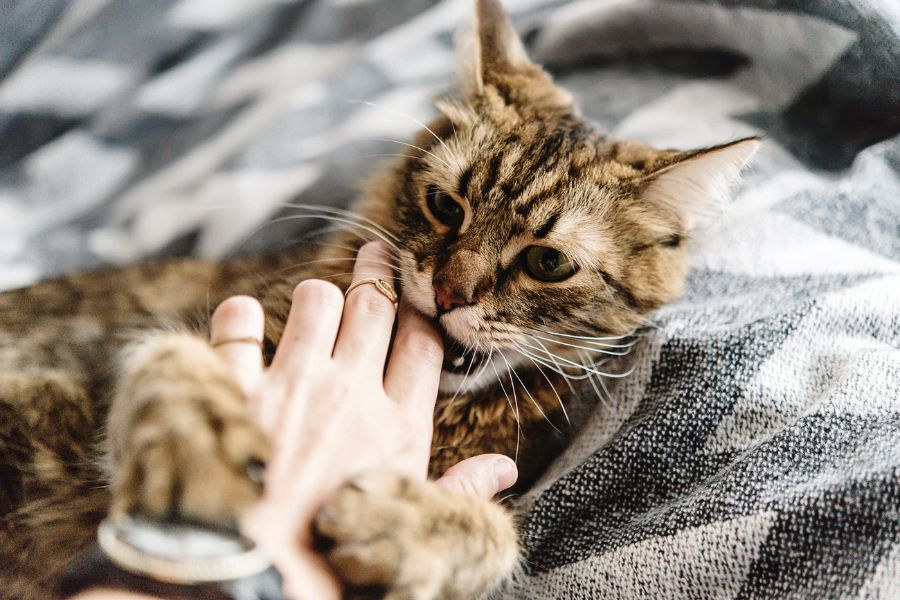
If you’ve ever wondered, “why do my cats bite me?”, you’re not alone. Many cat owners in Winter Park and beyond experience sudden nips or unexpected aggression from their pets. Understanding cat biting behavior is essential to building a safe, trusting relationship with your feline companion. In this guide, veterinarians explain why cats bite their owners, what triggers this behavior, and when it may signal a need for veterinary care.
Is It Normal When Cats Bite Their Owners?
Yes, it can be normal, but context matters. Cats use their mouths as part of natural communication. However, frequent or aggressive biting isn’t something to ignore.
Cats bite for several reasons, including:
- Communication (telling you to stop)
- Play behavior
- Fear or stress
- Medical discomfort
A gentle nibble during play is very different from a sudden, forceful bite. Recognizing the difference is key to managing the situation effectively.
Common Reasons Why Cats Bite Me
Understanding the root cause of cat biting behavior helps you respond appropriately. Let’s break down the most common reasons.
1. Overstimulation During Petting
One of the most common answers to “why do cats bite me?” is overstimulation.
Cats enjoy affection but only up to a point. When petting continues too long, they may become irritated and respond with a bite.
Signs your cat is overstimulated:
- Tail flicking rapidly
- Ears turning backward
- Skin twitching
- Sudden tension in the body
When you notice these signs, stop petting immediately to avoid a bite.
2. Play Aggression
Kittens and young cats often bite during play. If they weren’t taught proper boundaries early on, they may treat your hands like toys.
Common triggers include:
- Using hands instead of toys during playtime
- Lack of mental stimulation
- Excess pent-up energy
To fix this, always use toys like feather wands or laser pointers instead of your hands.
3. Fear or Anxiety
Cats bite their owners when they feel threatened or scared. This is a defensive reaction, not aggression.
Situations that may trigger fear:
- Loud noises (common in busy Winter Park neighborhoods)
- New people or pets
- Vet visits or unfamiliar environments
Creating a calm, predictable environment can reduce fear-based biting.
4. Redirected Aggression
Sometimes, your cat isn’t actually upset with you.
For example, if your cat sees another animal outside but can’t reach it, they may redirect their frustration toward you.
This type of cat biting behavior can seem sudden and confusing but is actually quite common.
5. Territorial Behavior
Cats are naturally territorial. If they feel their space is being invaded, they may bite to defend it.
This often happens when:
- Introducing a new pet
- Moving to a new home
- Rearranging furniture
Giving your cat safe zones can help reduce territorial stress.
6. Pain or Underlying Medical Issues
If your cat suddenly starts biting more than usual, it could be due to pain.
Conditions like dental disease, arthritis, or injury can make even a gentle touch uncomfortable.
In these cases, biting is your cat’s way of saying, “That hurts.”
If you suspect this, seeking veterinary care is essential.
How to Tell If Cat Biting Is Serious
Not all bites are equal. Some are harmless, while others require attention.
Warning signs of serious biting behavior:
- Frequent, unprovoked attacks
- Deep bites that break the skin
- Sudden personality changes
- Growling or hissing before biting
If you notice these signs, it’s time to consult a professional.
How to Stop Cats From Biting Their Owners
The good news is that most biting behavior can be corrected with consistency and patience.
1. Learn Your Cat’s Body Language
Cats give clear signals before they bite. Learning these cues can help you avoid triggering them.
Pay attention to:
- Tail movements
- Ear position
- Vocalizations
2. Use Positive Reinforcement
Reward calm, gentle behavior with treats or affection. Avoid punishment, as it can increase fear and aggression.
3. Provide Proper Play Outlets
Interactive toys help healthily channel your cat’s energy.
Best options include:
- Wand toys
- Puzzle feeders
- Scratching posts
This reduces the chance that your cat will use you as a target.
4. Set Boundaries Early
If your cat bites during play, stop interaction immediately. This teaches them that biting ends the fun.
5. Avoid Using Hands as Toys
This is one of the biggest mistakes cat owners make. Always keep play focused on toys not fingers.
6. Create a Stress-Free Environment
Cats thrive on routine. Keep feeding, playtime, and sleeping schedules consistent.
In busy areas, minimizing noise and providing quiet spaces can make a big difference.
When to Seek Veterinary Care
Sometimes, biting isn’t just behavioral; it’s medical.
You should consider professional help if:
- Biting starts suddenly
- Your cat shows signs of pain
- There are changes in appetite or activity
- Aggression is increasing over time
A veterinary Hospital in Winter Park can rule out underlying health problems and provide targeted solutions. At 4 Paws Animal Clinic, experienced vets can evaluate both behavioral and medical causes of biting.
Tips for Preventing Cat Biting Behavior
Prevention is always better than correction. Here are some simple ways to reduce biting incidents:
- Socialize kittens early
- Provide daily playtime
- Respect your cat’s personal space
- Avoid overstimulation
- Schedule regular diagnostic checkups
Consistency is key. The more predictable your environment, the more secure your cat will feel.
Conclusion:
If you’ve been asking, “why do my cats bite me?”, the answer usually comes down to communication, environment, or health. Understanding cat biting behavior allows you to respond appropriately and prevent future incidents. Whether it’s playful nipping or a sign of discomfort, paying attention to your cat’s signals is essential.
If biting becomes frequent or aggressive, don’t ignore it. Professional veterinary care can uncover underlying issues and help restore harmony in your home. If you’re in Winter Park, scheduling a visit with 4 Paws Animal Clinic can make all the difference in your cat’s behavior and well-being.
FAQs:
Q1: Why do cats bite their owners suddenly?
Ans: Cats may bite suddenly due to overstimulation, fear, or redirected aggression. Observing body language helps identify triggers and prevent unexpected bites.
Q2: Is it normal for cats to bite during play?
Ans: Yes, especially in kittens. However, proper training and using toys instead of hands can reduce this behavior over time.
Q3: How can I stop my cat from biting me?
Ans: Use positive reinforcement, avoid rough play, recognize warning signs, and provide engaging toys to redirect energy safely.
Q4: When should I worry about my cat’s biting behavior?
Ans: Frequent, aggressive, or sudden biting may indicate stress or medical issues and should be evaluated by a veterinarian.
Q5: Can health problems cause cats to bite?
Ans: Yes, pain from dental disease, injuries, or arthritis can lead to biting. A veterinary checkup can help diagnose and treat the issue.